
When news broke that CBSE was bringing AI into Class 3, many parents reacted with a mix of excitement and low-level panic. Should my child be learning Python already? Do we need to buy something? Is this another subject to worry about?
Here is the calmer version. For most children, nothing scary has happened. CBSE has added a way of thinking, not a pile of new technology, and the youngest children won't meet AI by name at all. Let's go through what has changed and what you can do about it.
What CBSE Has Actually Introduced
On 1 April 2026, CBSE issued Circular Acad-15/2026, launching a Computational Thinking (CT) and Artificial Intelligence (AI) curriculum for Classes 3 to 8 from the 2026-27 session. It follows NEP 2020 and the National Curriculum Framework for School Education. The circular says the goal is to build "AI-ready learners" through logical reasoning, problem-solving, pattern recognition, and algorithmic thinking, along with digital literacy and ethical use of technology.
The circular also points to the full syllabus document, and it is worth ten minutes of your time. It's more reassuring than most of what's written about this online. CBSE has also released free resource books for students and teachers on its academic website.
One detail many articles skip: the circular asks schools to take the steps needed to implement the curriculum, but it doesn't set penalties or a hard deadline. So expect big differences between schools. Some will be well prepared, and others will be figuring it out as they go.
Computational Thinking, Without the Jargon
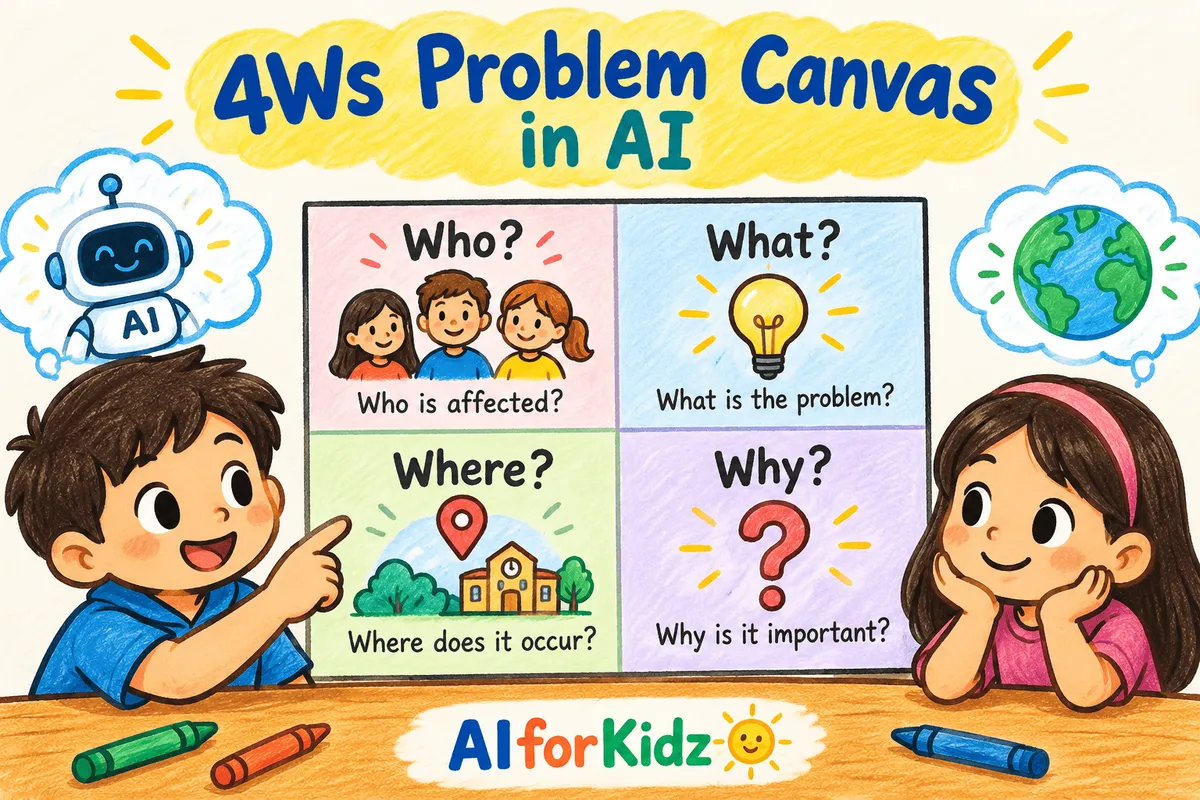
Computational thinking sounds technical, but you do it every day. Planning a wedding function means splitting a huge job into smaller ones: venue, food, guest list, transport. Noticing that your child's school bus is late every Monday is pattern spotting. A recipe is a set of steps that must happen in order. When your dosa batter fails and you work out that it was too thick, you've debugged a problem.
That's the whole idea: break problems down, find patterns, ignore what doesn't matter, and write clear steps. Computers work this way, which is why CBSE starts here before it gets anywhere near AI.
Classes 3 to 5: Puzzles, Not Programming
At this stage there is no AI as a topic and no formal coding. Computational thinking is built into Maths and The World Around Us, taught by the same teachers your child already has. CBSE suggests about 50 hours a year.
In practice that means puzzles, patterns, sequencing games, and worksheets. A child might find the rule behind a number pattern or write instructions for drawing a shape so a classmate can follow them exactly.
My honest view: if your child is in Class 3, 4, or 5, you do not need a paid "AI course." The curriculum itself is built from puzzles and logic, and a good puzzle book or a board game does the same job for a fraction of the cost.
Classes 6 to 8: Where AI Shows Up
From Class 6, children start meeting AI directly. CBSE suggests about 100 hours a year. As reported from the framework, that works out to around 40 hours of advanced computational thinking, 20 hours of introductory AI, and 40 hours of interdisciplinary projects.
Expect topics like where AI appears in daily life (video recommendations, voice assistants, maps), how machines learn from data, and why AI can be wrong or biased. Ethics and responsible use are part of the syllabus. Block-based coding may show up as a tool, but it isn't the point.
CBSE calls these hours a guide, so the exact timetable will vary between schools.
What About Classes 9 to 12?
Older students already have an AI skill subject (Subject Code 417 in Classes 9 and 10) and an elective (Code 843 in Classes 11 and 12). Some reports say AI will become compulsory in Classes 9 and 10 from 2027-28, but that hasn't been consistently confirmed. Check CBSE's latest circulars or ask your school before relying on it.
How Will Children Be Assessed?
For Classes 3 to 8, think projects, activities, and teacher observation, not long written papers. That makes sense, because you can't test how well a child reasons with a multiple-choice question. The practical takeaway is that a child who can explain how they got an answer will do better than one who has memorised terms.
Four Myths Worth Dropping
"My child must learn Python now." At this stage, no. Text coding isn't the focus.
"We need a laptop or robotics kit." The classroom activities are designed to work without them.
"AI will replace other subjects." It's built into existing ones, mainly Maths.
"All Indian schools follow this." It's a CBSE framework. ICSE and state boards have their own plans, so ask your school.
How to Help at Home
You don't need technical knowledge. What helps most is curiosity.
With Younger Children (Classes 3 to 5)
Ask "how did you work that out?" far more often than "what's the answer?" Games like Sudoku, tangrams, and treasure hunts with written clues are enough. A simple trick is to have your child write the steps for making a sandwich, then follow them exactly as written. The funny mistakes teach more than any worksheet.
With Older Children (Classes 6 to 8)
Start noticing AI together. When a video app suggests the next clip, ask why you think it chose that one. Try Google's free Teachable Machine, which lets kids train a simple model with a webcam, and Scratch from MIT for block coding.
Also let your child see an AI tool get something wrong. Ask a chatbot a question, then check the answer against their textbook. Seeing it be confidently incorrect is one of the best lessons in AI literacy there is. For ground rules, our guides on how much AI children should use and using ChatGPT for homework without cheating are a good start, and what ChatGPT is helps if it's new to you.
A small project, like a science exhibition entry or a simple Scratch game, will do more for your child than a certificate from an expensive weekend class.
Questions to Ask Your Child's School
Schools are at very different stages, so a few direct questions are fair. Who teaches computational thinking in Classes 3 to 5, and have they been trained? How many periods a week are set aside in Classes 6 to 8? Is the school using the free CBSE resource books? Which online tools will students use, and how is their data protected? And how will progress be reported to you?
The Bottom Line
CBSE's changes are really about teaching children to think clearly and question what a machine tells them, which was always worth doing. You can support that with everyday conversation and a few puzzles. Don't let anyone convince you that your child is falling behind because they haven't joined an AI class yet.
Frequently Asked Questions
Is AI compulsory in CBSE from Class 3?
Computational thinking starts in Class 3. AI as a topic begins from Class 6.
Is it a separate subject?
Not in Classes 3 to 5, where it's built into Maths and The World Around Us. In Classes 6 to 8 it has its own time allocation, but stays activity-based.
Does my child need to learn coding?
Not in the early years. Block coding may be used in middle school, but the focus is on thinking.
Where can I read the official curriculum?
Start with Circular Acad-15/2026 on CBSE's academic website, which links to the full framework and resource books.
Do I need an outside AI course?
No. Free tools and home activities are a better first step.
Does this apply to ICSE or state boards?
No, it's a CBSE framework. Check with your school.
How many hours are allotted?
CBSE suggests about 50 hours a year for Classes 3 to 5 and about 100 for Classes 6 to 8, and schools can adjust.